
Community Is a Practice, Not a Personality Trait
Some people seem naturally good at community.
They remember everyone's name.
They organize the dinner.
They introduce two people who should know each other.
They walk into a room and somehow, twenty minutes later, they're talking to everyone.
It's easy to assume they're simply community people.
Extroverts, perhaps.
People with some quality the rest of us either have or don't.
I don't think that's true.
I think community is something we practice.
Belonging Is Built From Small Actions
Most community-building doesn't look particularly impressive while it's happening.
You show up.
You say hello.
You return the following week.
You remember something someone told you.
You make room at the table.
You send the invitation.
You introduce yourself to the new person.
You stay for another ten minutes.
None of these actions creates community on its own.
But repeated over time, they become something.
Familiarity.
Trust.
Friendship.
Belonging.
You Don't Have to Be an Extrovert
This matters to me because I love people.
And I also love being alone.
I need quiet to create, think, read, and explore ideas.
I don't want a life filled with constant socializing, and I don't think that's what community requires.
Community isn't about how much time you spend with people.
It's about how you participate when you're with them.
An introvert who consistently shows up can be an extraordinary community builder.
So can the person who asks a thoughtful question.
The person who notices someone sitting alone.
The person who remembers your dog's name.
The person who quietly helps put the chairs away.
Community has many jobs.
Not all of them belong to the loudest person in the room.
Showing Up Is a Skill
Throughout this season, I've kept returning to the idea of showing up.
It sounds almost too simple.
But showing up takes practice.
We have to learn not to wait until we feel perfectly ready.
Not to turn ten minutes late into a reason to stay home.
Not to convince ourselves we need to bring something, accomplish something, or be particularly interesting when we arrive.
Sometimes participation really is enough.
You came.
You were there.
You became part of what happened.
And the more often we do that, the easier it becomes.
Community Requires Receiving, Too
There is another side of community-building that I think we talk about less.
We have to let other people show up for us.
We have to accept the invitation.
Sit at the table someone else prepared.
Let someone remember our coffee order.
Allow ourselves to become a regular.
Community isn't only something we give.
It's something we agree to receive.
That can be its own kind of practice.
Someone Has to Go First
Of course, communities also need people willing to begin things.
Someone starts the book club.
Someone invites everyone over.
Someone organizes the Saturday walk.
Someone opens the doors.
But the person who starts something cannot create community alone.
Community requires the people who say yes.
The people who return.
The people who eventually begin inviting others.
The people who start saying "we" instead of "they."
That's when something shifts.
We Get Better at Belonging
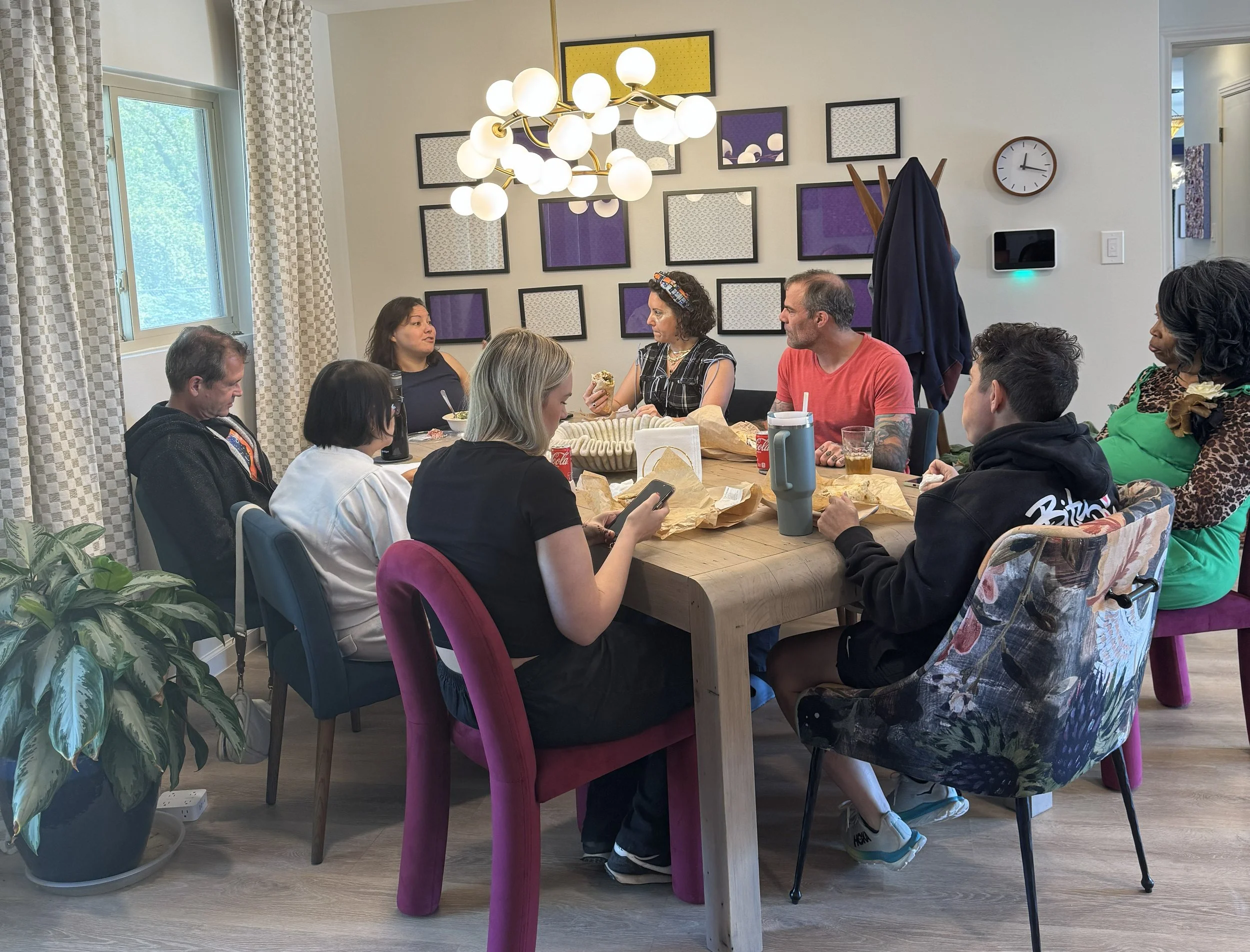
I've watched this happen again and again at Maeve House.
Someone arrives unsure.
They sit quietly.
They come back.
Eventually, they know where the coffee is.
They recognize people.
Someone notices when they're missing.
Then one day, they're the person welcoming someone new.
Nothing dramatic happened.
They practiced belonging.
And somewhere along the way, they became part of the community they were looking for.
Community Is Something We Do
Maybe that's the thing I most want people to understand.
Belonging isn't reserved for people who are naturally social.
Community isn't something other people create and we either happen to find or don't.
We participate in making it.
Every time we show up.
Every time we return.
Every time we notice someone.
Every time we accept an invitation.
Every time we make room for another person.
We are practicing community.
And the beautiful thing about a practice is that we don't have to be naturally good at it.
We simply have to keep doing it.
Belonging rarely happens all at once.
We build it together.