
The Hidden Cost of Having No Place to Go
There is a particular question that appears in adulthood that I don't remember asking very often when I was younger:
Where should we go?
Not where should we travel.
Not where should we eat.
Where do we go when we simply want to be around other people?
For many adults, the answer has become surprisingly difficult.
We have homes.
We have workplaces, even if some of those workplaces are now also our homes.
We have errands and appointments and places where we consume things.
But having places to be isn't quite the same as having somewhere to go.
Somewhere to Go
A place to go is somewhere you don't need much of a reason to visit.
You know how it works.
You know you can stay awhile.
You might know some of the people there.
And, eventually, some of them might know you.
You don't need a special occasion.
You simply go.
For much of our lives, these places are built in.
School gives us hallways and cafeterias and fields.
College gives us campuses.
Religious communities, clubs, neighborhood organizations, sports leagues and other groups have traditionally given adults places to gather regularly.
But as we talked about in the last essay, many of us stopped joining things.
And when we stopped joining, we didn't only lose organizations.
We lost places.
Life Gets Smaller Quietly
I don't think most people decide they want their world to become smaller.
It happens gradually.
We work from home one more day.
We order dinner instead of going out.
We have something delivered instead of walking into the store.
We watch the movie from the couch.
None of these choices is inherently bad. I enjoy convenience as much as anyone.
But taken together, they can create a life in which we rarely encounter anyone we didn't specifically arrange to see.
That changes something.
We lose the casual conversation.
The familiar face.
The person we know just well enough to say hello.
The chance encounter that becomes something more.
We lose some of the texture of being among other people.
Places Give Shape to Our Weeks
Having somewhere to go also gives us rhythm.
Tuesday morning at the gym.
Wednesday lunch with the same group.
Saturday at the clubhouse.
The activity itself almost matters less than the return.
Regular places create little markers in time.
Something to anticipate.
Somewhere to show up.
People we'll probably see.
Without those markers, weeks can begin to blur together, particularly for people who work from home or live alone.
We can be busy and still feel as though something is missing.
We Need More Than Our Closest Relationships
I think one of the hidden costs of having no place to go is the amount of pressure it puts on our closest relationships.
We cannot expect a partner, a best friend, or a handful of family members to provide every form of connection we need.
There is value in weaker ties too.
The person who always sits across from you.
The neighbor you see on your walk.
The member who asks how the project went.
The person behind the counter who notices you haven't been in lately.
These relationships may never become intimate friendships.
They still make a life feel inhabited.
They remind us that we exist in a world with other people.
Sometimes You Need a Reason to Leave the House
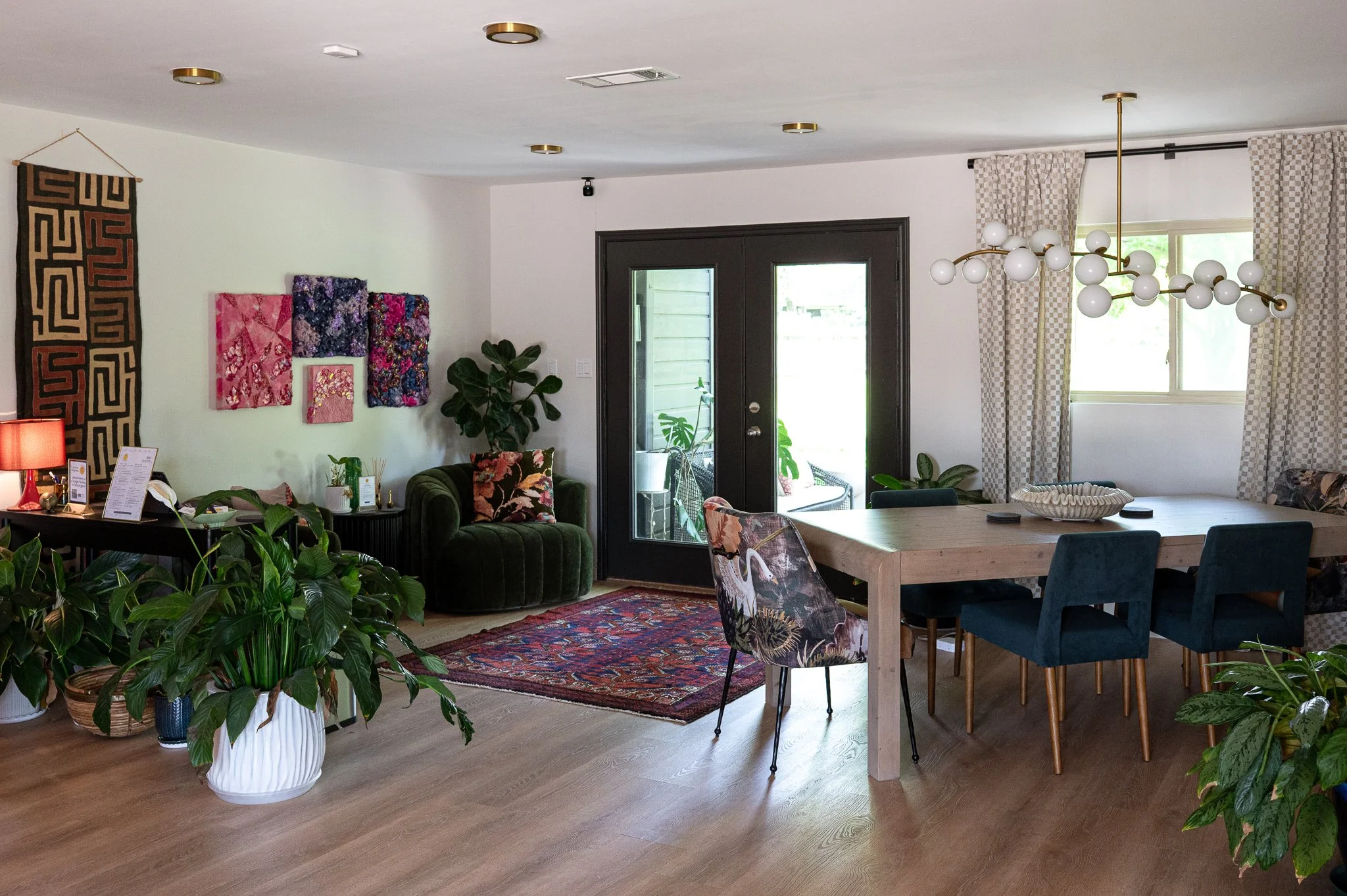
I've been thinking about this a lot at Maeve House.
Members have told me that sometimes the most important thing is simply knowing they have somewhere to go.
They don't need to organize a gathering.
They don't need to find someone who's free.
They don't need a particularly good reason.
The House is there.
Their people may be there.
They can show up.
I don't think we should underestimate what a gift that is in adult life.
A place doesn't have to entertain us every minute.
Sometimes its greatest value is simply being available.
A Place Can Make a Life Bigger
Having somewhere to go doesn't mean filling every evening or becoming endlessly social.
I would hate that.
Solitude matters too.
But solitude feels different when it exists within a life that also contains connection.
A quiet Sunday can be restorative when you know there are places you'll return to during the week.
The goal isn't constant activity.
It's having a world larger than the walls of your home.
A few places that know you.
A few rhythms that carry you out the door.
A few opportunities for the unexpected.
Find Somewhere to Go
Maybe this is why I've become so interested in places.
Beautiful places.
Regular places.
Places we remember.
Places we join.
They do more than give us somewhere to spend our time.
They create the conditions for our lives to overlap with other lives.
And that overlap is where so much of belonging begins.
If your world has been feeling a little small lately, perhaps the answer isn't to make more plans.
Perhaps it's to find somewhere to go.
And then keep going back.