
The Case for Unplugging Without Disappearing
At the end of a long day, what do you do to relax?
Maybe you turn on the television. Watch a movie. Scroll through Instagram. Catch up on the news. Find something interesting on YouTube.
Sometimes you do several of those things at once.
There's nothing inherently wrong with any of them. Cross-stitching while watching procedurals is, after all, my second favorite hobby.
But I've been thinking about how much of our downtime is spent looking at screens.
We work on them. Communicate through them. Read the news on them. And when we're finished with all of that, we often turn to another screen to relax.
Somewhere along the way, unplugging became something we're supposed to do by stepping away from our everyday lives.
A digital detox.
A weekend off the grid.
A vacation somewhere without cell service.
But what if unplugging doesn't have to mean disappearing from our lives?
What if it could mean stepping more fully into them?
The Difference Between Distraction and Engagement
I think there's a difference between being distracted and being engaged.
Both can feel like a break from whatever we've been doing. But they don't always leave us feeling the same way.
Sometimes I finish an evening of watching television feeling wonderfully relaxed. Other times, I've spent an hour looking at my phone and can barely remember what I saw.
And sometimes, after a day filled with information, decisions, and responsibilities, what I really need isn't another thing to consume.
It's something to participate in.
A conversation that takes an unexpected turn.
A game that makes everyone laugh.
An activity that keeps my hands busy and my mind pleasantly occupied.
The difference isn't necessarily whether a screen is involved. It's whether I'm present for what I'm doing.
Not Everything Has to Make Us Better
There's an entire industry devoted to helping us make better use of our time.
We're encouraged to optimize our mornings, improve our habits, track our sleep, and turn our hobbies into opportunities for personal growth.
Even rest can start to feel like something we're supposed to accomplish.
Maybe it's my age, but I'm exhausted by all this self-improvement.
And I say that as someone who loves learning, building things, and exploring new ideas. I don't want to stop growing. I just don't want every moment of my life to be devoted to becoming a better version of myself.
Sometimes I want to enjoy the version of myself that's already here.
I think that's part of why I created Maeve House. I wanted a place where people could come together without needing to accomplish anything. Somewhere to work, certainly, but also somewhere to play, connect, and simply be.
Because I don't think every hour needs to make us healthier, smarter, more productive, or more interesting.
Sometimes we should be able to do something simply because we enjoy it.
Play a game.
Make something with our hands.
Spend an evening laughing with people.
Not because these activities improve our cognitive function or help us perform better at work the next day.
Because they're enjoyable.
Because we're allowed to have fun.
The Unexpected Power of Play
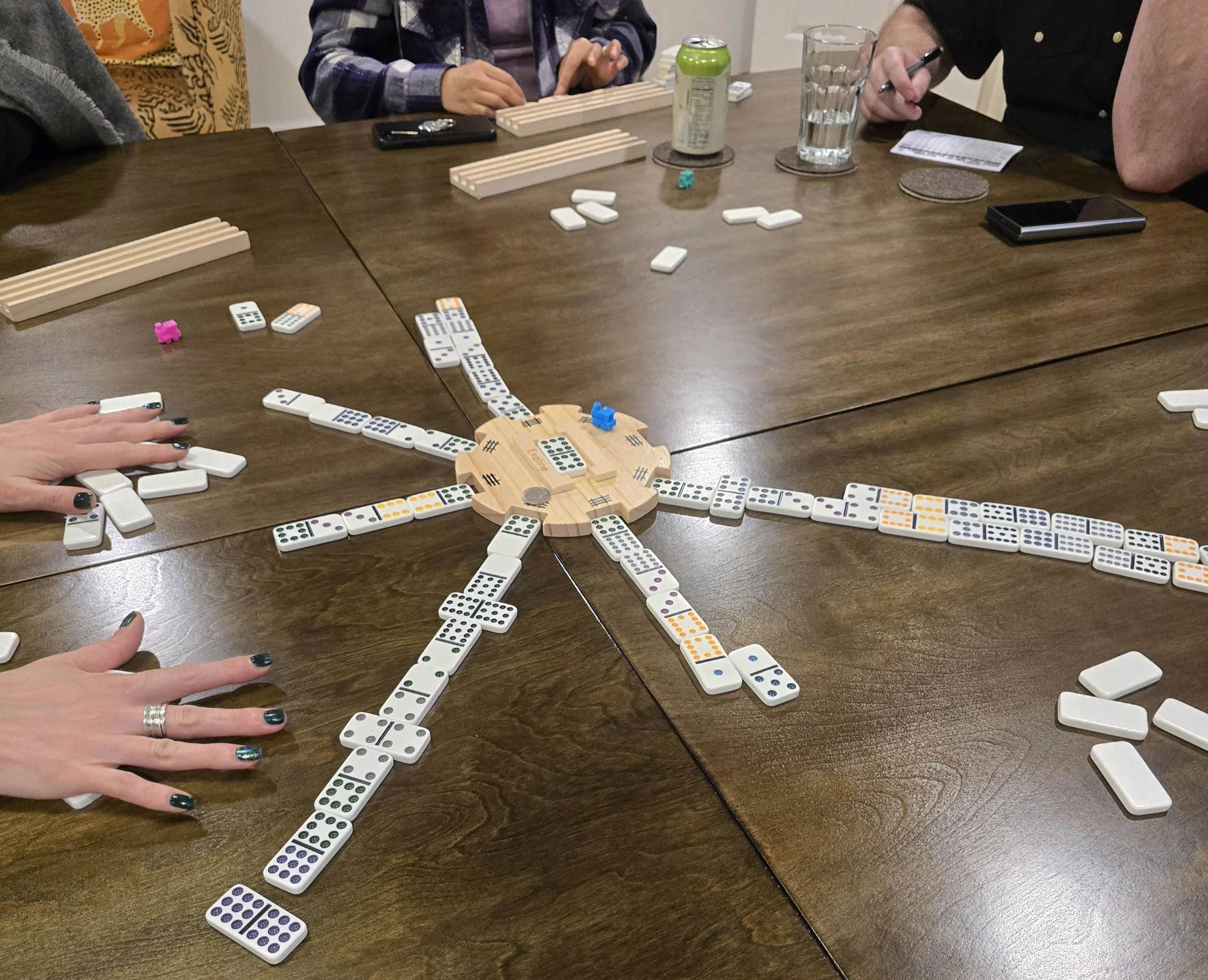
One of my favorite things to watch at Maeve House is what happens on Thursday evenings.
Thursday is Fun Club, and over time, a wonderful group of members has developed around it. Some joined Maeve House specifically because they wanted a regular evening to come together and play.
Depending on the week, there might be games, bingo, trivia, cards, or something else entirely.
There's no professional development happening. No one needs to make a useful connection or leave with a new skill.
People come because they enjoy being there.
And something interesting happens when everyone becomes absorbed in the same activity.
The phones tend to stay put.
Conversations wander.
People laugh.
The outside world gets a little quieter for a couple of hours.
No one has to announce that they're unplugging.
They're simply having a good time.
Stepping Away Without Going Away
I think we've made unplugging sound much more complicated than it needs to be.
We imagine that we have to remove ourselves from our normal lives to experience a real break.
But sometimes the most restorative thing we can do is step into a different part of those lives.
Spend an afternoon with friends.
Go somewhere to make something.
Play cards around a table.
Take a walk without listening to anything.
Read a book somewhere other than your couch.
Join a regular gathering where someone else has already made the plans.
These aren't extraordinary experiences.
That's part of what makes them valuable.
We can fit them into the lives we already have.
And unlike a vacation or a retreat, we can return to them again and again.
We Don't Have to Earn Our Enjoyment
I wonder how often we postpone enjoyment because we feel we haven't earned it yet.
There's more work to finish.
Another email to answer.
Something at home that needs attention.
A project we should be making progress on.
There's always something.
And while responsibilities are real, I don't think we should have to complete everything before we're allowed to enjoy ourselves.
Life isn't something that begins once the to-do list is finished.
It's happening while we're making the list.
While we're answering emails.
While we're trying to figure out what to make for dinner.
And it's happening on Thursday evenings when a group of adults gathers around a table to play a game.
Those hours count, too.
Find Something Worth Putting Your Phone Down For
I'm not interested in giving up television, throwing away my phone, or pretending technology hasn't made my life better in countless ways.
I also don't want to turn unplugging into another self-improvement project.
I simply want more moments when I'm so engaged in living that I forget about everything else for a while.
More conversations that run long.
More laughter.
More time spent making things.
More ordinary afternoons and evenings that feel good simply because I enjoyed them.
Perhaps the answer isn't always to become more disciplined about putting our phones away.
Perhaps sometimes we simply need more things in our lives that make us forget to pick them up.
Because unplugging doesn't have to mean stepping away from life.
Sometimes it means stepping more fully into it.