
The Power of Third Places: Why They Matter More Than Ever
The Power of Third Places: Why They Matter More Than Ever
Most of us move through our days between two places: home and work.
Home is private.
Work is purposeful.
But something essential lives in between.
Sociologists call these in-between spaces third places — the cafés, libraries, community spaces, and gathering spots where people can show up without obligation or performance.
And right now, many adults are missing them more than they realize.
What is a third place, really?
A third place isn’t defined by what you do there.
It’s defined by how it feels.
Third places are:
low-pressure
familiar
welcoming
easy to return to
They don’t require productivity.
They don’t demand social energy.
They simply allow presence.
Why adults lose third places
As children and young adults, third places are built into our lives — schools, campuses, clubs, shared environments.
As adults, those structures quietly disappear.
Remote work, long commutes, caregiving, and digital life have made many days efficient — but isolated. Without noticing, many of us go weeks without being in a space where we are seen without expectation.
Why third places matter for belonging
Belonging doesn’t usually arrive through big moments.
It forms through repetition and familiarity.
Seeing the same faces.
Being recognized.
Knowing where you fit — even loosely.
Third places create the conditions for this kind of belonging without asking people to try harder or be more outgoing.
They make connection possible without forcing it.
Third places support wellbeing, not just social life
Research consistently shows that third places:
reduce loneliness
support mental health
increase feelings of safety and connection
strengthen local communities
But beyond research, many of us feel the absence of third places in quieter ways — a sense of disconnection, restlessness, or not quite knowing where we belong.
Why we need third places now more than ever
Modern life asks a lot of adults.
We’re expected to be productive, self-sufficient, and socially capable — often without spaces that support us in being human.
Third places offer relief from that pressure.
They remind us that we don’t have to earn our place.
We simply have to arrive.
Where Maeve House fits into this idea
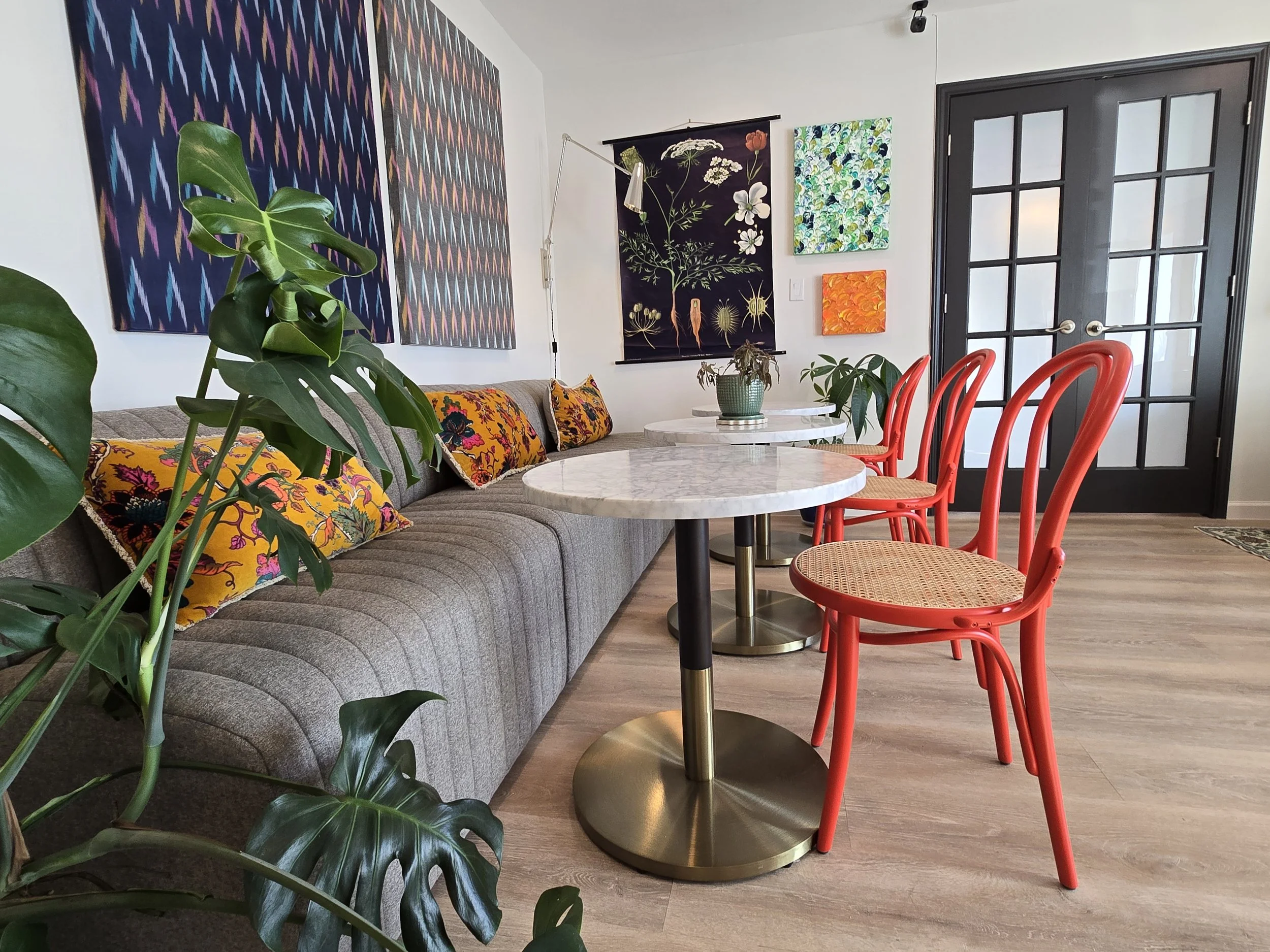
Maeve House was created to function as a third place — a space between home and work where adults can return regularly, feel at ease, and let connection grow naturally.
And whether Maeve House is your third place or not, I hope this idea encourages you to seek spaces that welcome you back without asking you to perform.
Those spaces matter.
And we all deserve them.
If you’re local to Southwest Austin and curious what a modern third place can feel like, you’re welcome to come see Maeve House for yourself.